
Umbilical hernia repair

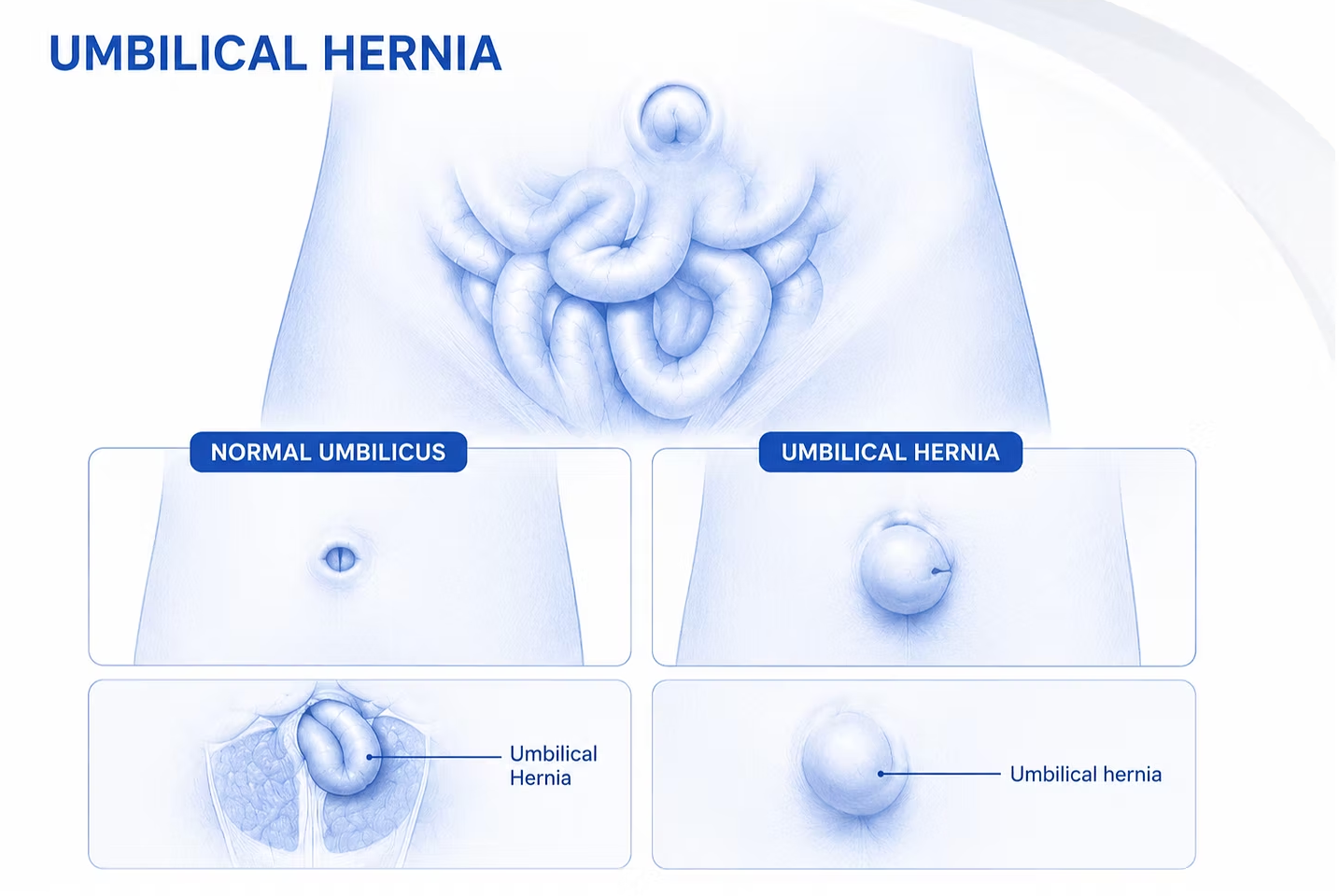
An umbilical hernia occurs when abdominal contents, such as fat or bowel, push through a weakness in the abdominal wall at or near the navel.

It may appear as a swelling or bulge at the umbilicus and may become more noticeable when coughing, standing, or straining. Symptoms may include discomfort, pain, pressure, or cosmetic concern. Surgery may be recommended if the hernia is painful, enlarging, symptomatic, or at risk of becoming trapped.

What to expect

Before Your Surgery

  • Authorization should be obtained prior to surgery and will be done by the hospital or the rooms staff depending on whether you are an in- or outpatient.
  • Make sure that you have been fasting for solid foods for at least 6 hours prior to your surgery and for clear liquids or water for at least 2 hours prior to your surgery. Discuss your chronic medications with your doctor or hospital staff prior to your surgery as you usually are allowed to take chronic medications the day of surgery, barring diabetic medication the day of the procedure. If you are taking any blood thinning medication please discuss these in detail with your doctor as special arrangements need to be made for these.

Day of Surgery

You will be admitted to hospital or day theatre. The operation will be performed under anaesthesia. After surgery, you will be monitored in recovery before discharge or transfer to the ward.

Procedure

The procedure is performed under general or spinal anaesthesia.

An incision is made near the umbilicus. The hernia sac is identified, and the contents are returned into the abdominal cavity. The weakness in the abdominal wall is repaired using sutures and, in some cases, surgical mesh to reduce the risk of recurrence.

The wound is then closed and dressed. Large umbilical hernias may be repaired laparoscopically.

Procedure Length

The procedure usually takes 30–60 minutes, depending on the size and complexity of the hernia.

Possible Complications

  • Possible complications include bleeding, infection, bruising, swelling, seroma or haematoma formation, chronic pain, recurrence of the hernia, poor wound healing, mesh-related complications, bowel injury, and unintended damage to surrounding structures.

Duration of Hospital Stay

  • Most patients are discharged on the same day. Some patients may require an overnight stay depending on pain control, anaesthetic recovery, or other medical conditions.

Discharge Instructions

  • Keep the wound clean and dry. Take prescribed pain medication and antibiotics if provided.
  • Mild bruising, swelling, or discomfort around the umbilicus is common. Avoid constipation and straining. Support the wound when coughing or moving.
  • Please contact the rooms if you develop fever, worsening pain, wound redness, discharge, vomiting, or a recurrent swelling at the umbilicus.

Return to Activities

  • Light walking is encouraged from the day of surgery. Avoid heavy lifting, abdominal straining, gym activity, and strenuous exercise for 4–6 weeks.

Back to Work Estimation

  • Desk work: approximately 5–7 days.
    Physically demanding work: approximately 3–4 weeks, depending on recovery and the type of repair.

Follow-Up and Results Discussion

A follow-up appointment may be arranged 5–7 days after surgery for wound review if necessary.

A further follow-up is usually arranged 10–14 days after surgery for wound assessment, suture or clip removal if required, and review of recovery progress. Histology discussion will occur if tissue was sent for analysis.