
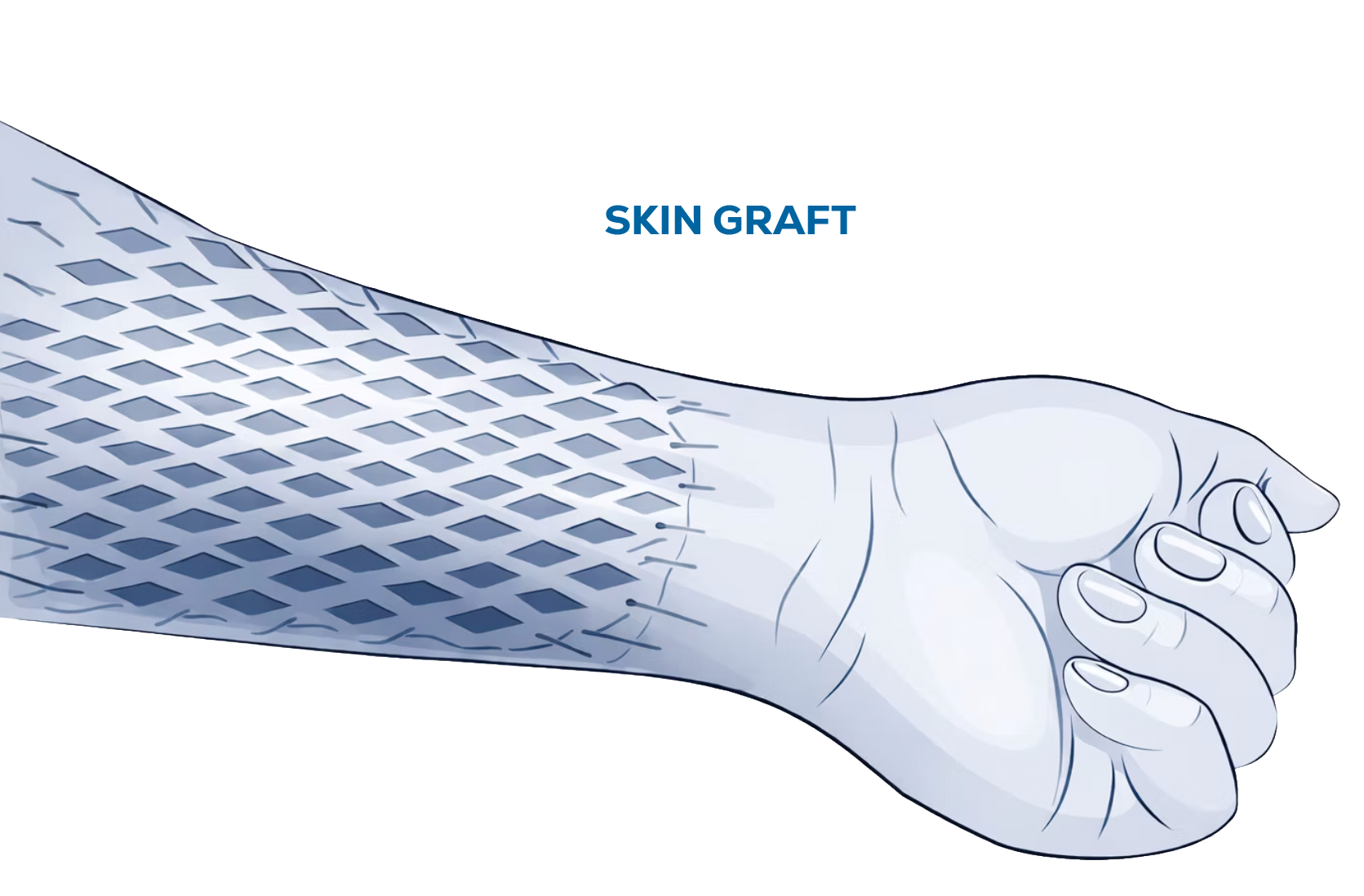
Skin Grafts

A skin graft is a surgical procedure in which healthy skin is taken from one area of the body (the donor site) and transplanted to another area (the recipient site) where skin has been lost. Skin grafts are commonly required for burns, chronic wounds, traumatic injuries, infections, or after surgical removal of damaged tissue.

What to expect

Before Your Surgery

  • Authorization will be arranged by the rooms or hospital staff.
  • Fasting:
  • No solid food for 6 hours before surgery
  • No clear liquids for 2 hours before surgery
  • Most chronic medications may be taken, except diabetic medication (to be discussed with your doctor).
  • Inform your doctor if you are on blood-thinning medication.
  • Smoking should ideally be stopped before surgery, as it significantly affects graft healing.

Day of Surgery

Skin grafting is usually performed under general anaesthesia. After the graft is applied, firm dressings are placed to protect the graft. You will receive detailed post-operative instructions before leaving theatre or recovery.

Procedure

Skin grafting is performed when a wound is unable to heal on its own.
  • Damaged or non-viable tissue is removed from the wound.
  • A thin layer of healthy skin is harvested from a donor site (commonly the thigh).
  • The graft may be applied as a sheet or meshed to allow drainage and expansion.
  • The graft is secured in place and covered with specialised dressings.
  • The donor site is dressed and allowed to heal separately.
In some cases, negative-pressure (VAC) dressings are used to improve graft take.

Procedure Length

The procedure usually takes 60–120 minutes, depending on the size and complexity of the wound

Possible Complications

  • Bleeding
  • Infection
  • Partial or complete graft failure
  • Delayed wound healing
  • Scarring or colour mismatch
  • Pain at the donor or graft site
  • Unintended damage to surrounding structures
  • Need for repeat grafting or further surgery
  • Complications are uncommon. Contact the rooms immediately if you notice increasing pain, redness, swelling, discharge, fever, or a foul smell from the wound.

Duration of Hospital Stay

Hospital stay varies depending on graft size and location: Small grafts: 1–3 days Larger or complex grafts: longer admission may be required

Discharge Instructions

  • Keep dressings clean, dry, and intact.
  • Do not remove or disturb dressings unless instructed.
  • Take prescribed pain medication and antibiotics as directed.
  • Avoid pressure, friction, or movement over the graft site.
  • Monitor both graft and donor sites for signs of infection.

Return to Activities

  • Light activities may resume after 1–2 weeks, depending on graft location.
  • Avoid strenuous activity, stretching, or trauma to the graft until cleared by your doctor.
 
  • Return to work depends on graft size, location, and job type:
  • Desk-based work: 1–2 weeks
  • Physical work: longer recovery may be required
  Follow-Up and Results Discussion A follow-up visit is usually scheduled 1–2 weeks after surgery for:
  • Inspection of the graft and donor site
  • Dressing changes or removal
  • Assessment of graft take
  • Planning further wound care or procedures if required
If a follow-up appointment is not provided, please contact the rooms to confirm.