
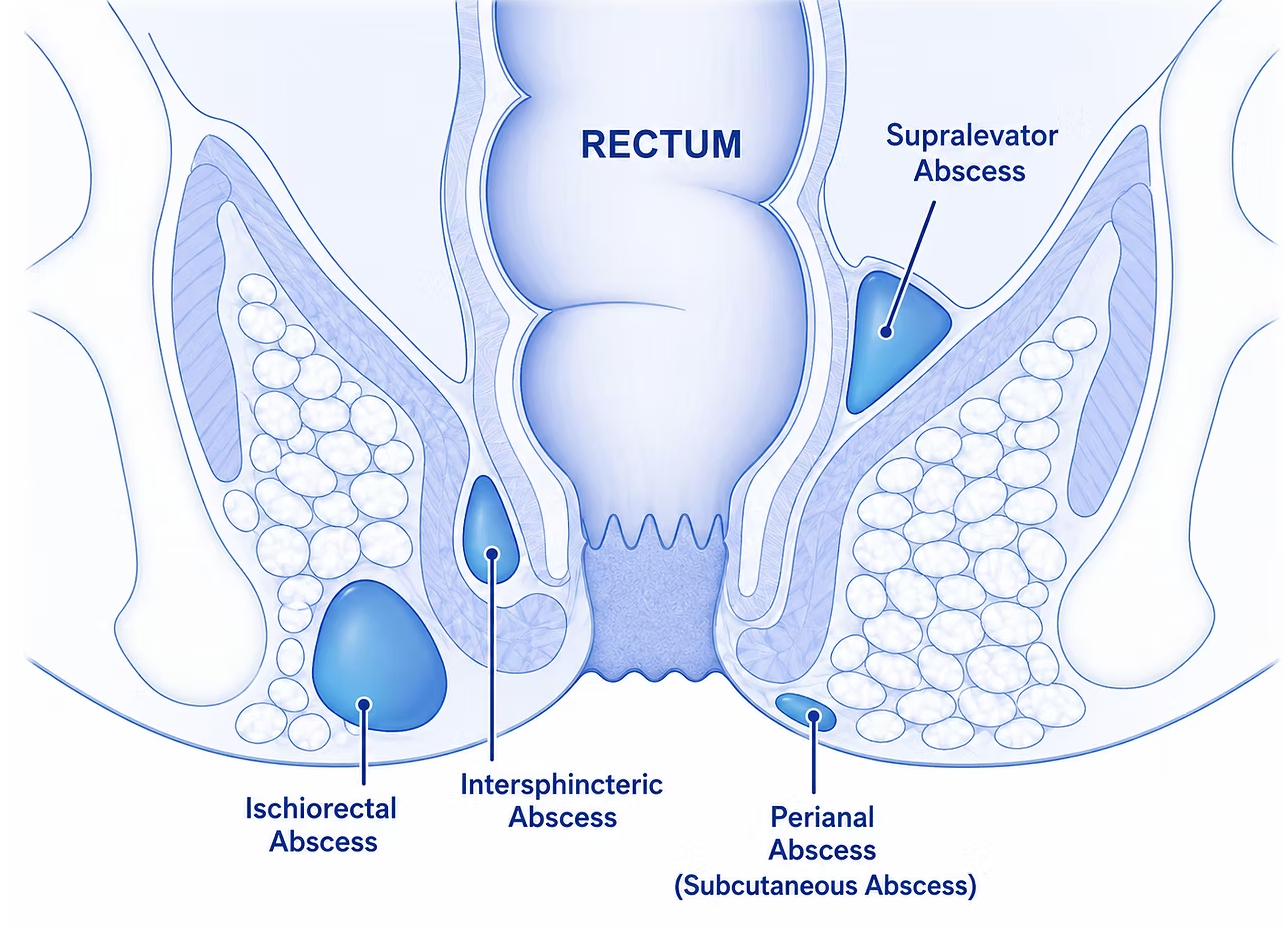
Perianal abscesses

A perianal abscess is a collection of pus near the anus or rectum caused by infection of small anal glands. It commonly presents with pain, swelling, redness, fever, and difficulty sitting or walking.

If left untreated, the infection may spread or develop into a fistula in ano.

What to expect

Before Your Surgery

  • Authorization should be obtained prior to surgery and will be done by the hospital or the rooms staff depending on whether you are an in- or outpatient.
  • Make sure that you have been fasting for solid foods for at least 6 hours prior to your surgery and for clear liquids or water for at least 2 hours prior to your surgery. Discuss your chronic medications with your doctor or hospital staff prior to your surgery as you usually are allowed to take chronic medications the day of surgery, barring diabetic medication the day of the procedure. If you are taking any blood thinning medication please discuss these in detail with your doctor as special arrangements need to be made for these.

Day of Surgery

You will be admitted to hospital or day theatre. The procedure is usually performed under general or spinal anaesthesia. After surgery, you will be monitored in recovery before discharge or transfer to the ward.

Procedure

Treatment usually requires surgical drainage. An incision is made over the abscess to allow the infected material to drain. The cavity is cleaned and irrigated thoroughly.

The wound is usually left open to heal from the inside out. A dressing or antimicrobial packing may be placed temporarily. In some cases, a drain may be inserted.

If a fistula is identified during surgery, further treatment may be planned at a later stage.

Procedure Length

The procedure usually takes 20–45 minutes.

Possible Complications

  • Possible complications include bleeding, infection, delayed wound healing, recurrence of the abscess, fistula formation, pain, scarring, and unintended damage to surrounding structures.

Duration of Hospital Stay

Most patients are discharged on the same day, although larger abscesses or severe infections may require an overnight stay or longer admission.

Discharge Instructions

  • Take prescribed pain medication and antibiotics as directed. Keep the area clean and dry.
  • Warm sitz baths may help with pain relief and hygiene. Dressings may need regular changing until the wound heals. Some drainage from the wound is expected during healing.
  • Drink plenty of water and maintain a high-fibre diet to avoid constipation and straining.
  • Please contact the rooms if you develop fever, worsening pain, increasing swelling, heavy bleeding, foul-smelling discharge, or difficulty passing stool or urine.

Return to Activities

  • Light walking is encouraged. Avoid heavy lifting, prolonged sitting, cycling, and strenuous exercise for 1–2 weeks or until comfortable.
  • Desk work: approximately 2–5 days.
    Physically demanding work: approximately 1–2 weeks, depending on pain, wound healing, and the severity of the infection.

Follow-Up and Results Discussion

A follow-up appointment may be arranged 5–7 days after surgery for wound inspection, dressing review, and drain or packing removal if necessary.

A further follow-up is usually arranged 10–14 days after surgery to assess healing, review bacterial culture or histology results if samples were taken, and evaluate for fistula formation if symptoms persist.