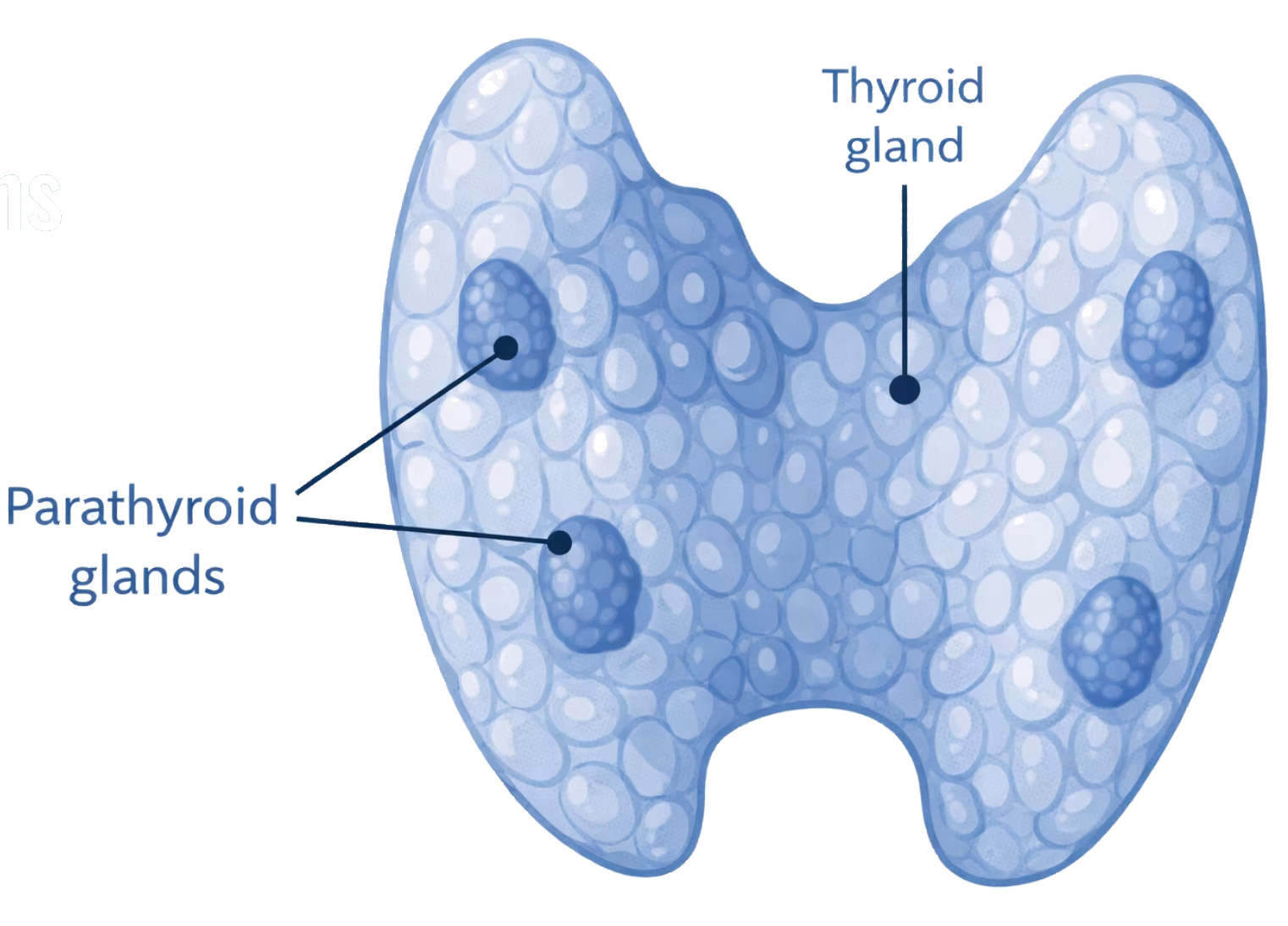
Parathyroid growths

Parathyroid dysfunction most commonly presents as hyperparathyroidism, where excessive PTH causes high calcium levels in the blood.

Symptoms may include:

Fatigue and weakness, Bone pain or fractures, Kidney stones, Abdominal pain or constipation, Depression, poor concentration, or memory problems

Less commonly, hypoparathyroidism may occur, usually following neck surgery, and leads to low calcium levels.

Parathyroid growths are usually benign adenomas and are the most common cause of primary hyperparathyroidism. Rarely, parathyroid cancer may occur.

Growths may be single or involve multiple glands and often require surgery when symptomatic or associated with significant biochemical abnormalities.

What to expect

Before Your Surgery

  • Authorization will be arranged by the rooms or hospital staff.
  • Fasting:
  • No solid food for 6 hours before surgery
  • No clear liquids for 2 hours before surgery
  • Most chronic medications may be taken, except diabetic medication (to be discussed with your doctor).
  • Inform your doctor if you are taking blood-thinning medication.
  • Pre-operative blood tests and imaging will be arranged.

Day of Surgery

Parathyroid surgery is performed under general anaesthesia. A small incision is made in the lower neck, often using a minimally invasive approach. Post-operative monitoring focuses on calcium levels and voice changes.

Procedure

Management depends on the severity of disease and investigation findings.

  • Mild or asymptomatic cases may be monitored.
  • Symptomatic or biochemically significant disease usually requires parathyroidectomy.
  • Surgery may involve removal of a single abnormal gland or multiple glands.
  • Intra-operative hormone monitoring may be used.
  • All removed tissue is sent for histological analysis.

Procedure Length

Parathyroid surgery typically takes 60–120 minutes, depending on complexity.

Possible Complications

  • Bleeding or haematoma
  • Infection
  • Temporary or permanent low calcium levels
  • Voice changes due to nerve irritation
  • Need for calcium or vitamin D supplementation
  • Unintended damage to surrounding structures
  • Rarely, persistent or recurrent disease requiring further surgery
  • Complications are uncommon. Contact the rooms immediately if you experience neck swelling, tingling in the lips or fingers, muscle cramps, voice changes, or fever.

Duration of Hospital Stay

3-5 days

Discharge Instructions

  • Keep the wound clean and dry.
  • Take prescribed calcium or vitamin D supplements if advised.
  • Monitor for symptoms of low calcium (tingling, cramps).
  • Avoid strenuous activity until cleared by your doctor.

Return to Activities

  • Light activities may resume within 1–2 weeks.
  • Avoid strenuous exercise and heavy lifting for 3–4 weeks.
Back to work estimation
  • Desk-based work: 1–2 weeks
  • Physical work: 3–4 weeks, depending on surgery extent
Follow-Up and Results discussion

A follow-up appointment is usually scheduled 1–2 weeks after surgery for:

  • Wound inspection
  • Review of histology results
  • Blood test review
  • Long-term clcium management

If a follow-up appointment is not provided, please contact the rooms to confirm.