
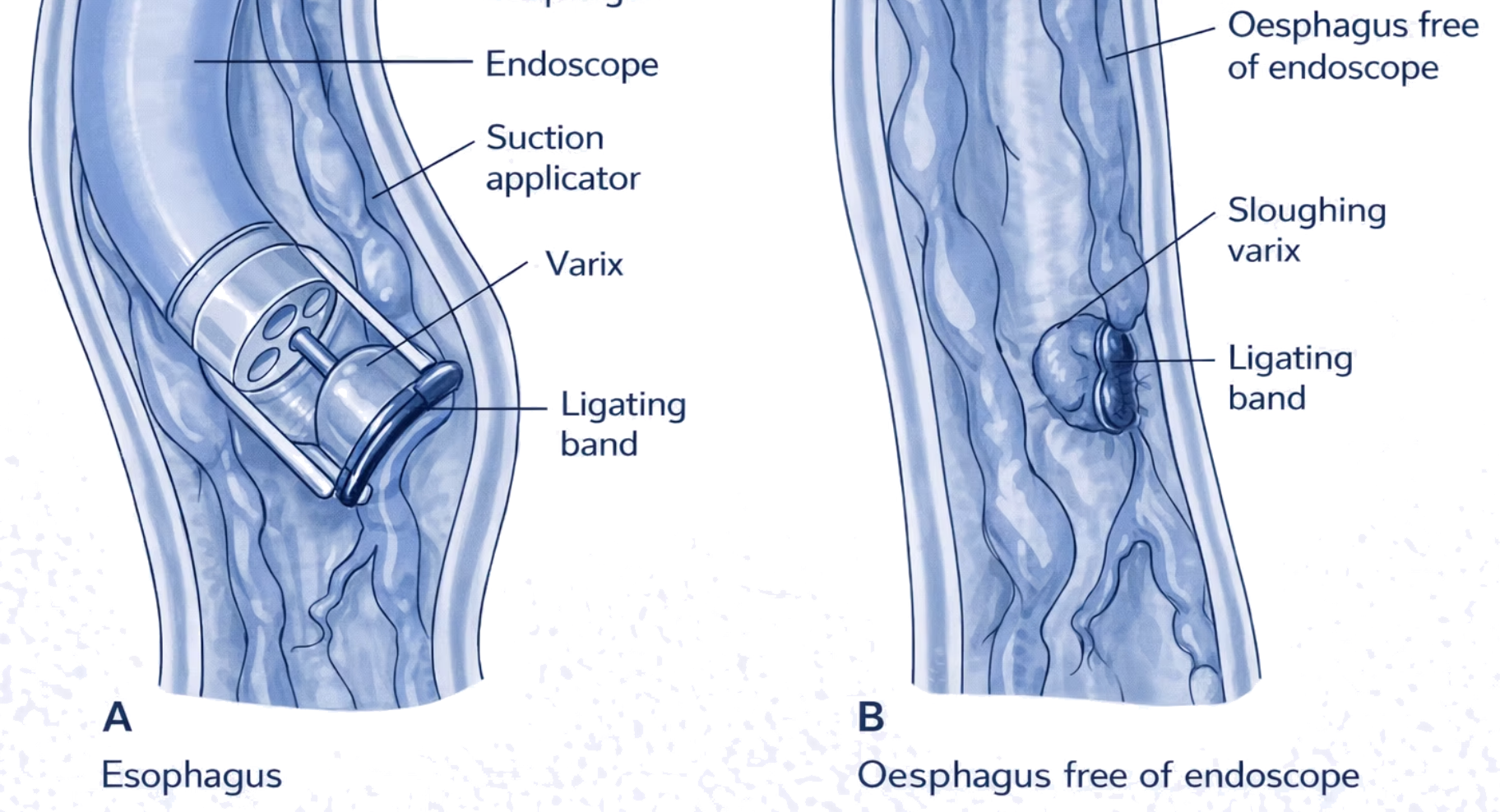
Oesophageal variceal banding

Oesophageal variceal banding is an endoscopic treatment used to control or prevent bleeding from oesophageal varices. Varices are enlarged veins in the oesophagus that develop most commonly in patients with chronic liver disease and portal hypertension. These veins are fragile and can bleed severely, which may be life-threatening.

Banding reduces the risk of bleeding by placing small rubber bands around the varices, causing them to collapse and scar.

What to expect

Before Your Surgery

  • This procedure is often performed urgently. Authorization will be arranged by the rooms or hospital staff where applicable.
  • Fasting:
  • No solid food for 6 hours before the procedure
  • No clear liquids for 2 hours before the procedure
    (In emergencies, the procedure may proceed despite incomplete fasting.)
  • Inform your doctor if you are taking blood-thinning medication.
  • Diabetic medication instructions will be discussed in advance.

Day of Surgery

Oesophageal variceal banding is performed under sedation. You will be monitored closely during the procedure and in recovery. In emergency cases, additional supportive treatment may be required.

Procedure

The procedure is performed during a gastroscopy.

  • A flexible endoscope is passed through the mouth into the oesophagus.
  • Enlarged veins (varices) are identified.
  • Small rubber bands are applied to the varices using a banding device attached to the scope.
  • Multiple bands may be placed during the same procedure.
  • The banded veins shrink and fall off over time, reducing bleeding risk.

Banding may be done as an emergency (active bleeding) or as planned prevention.

Procedure Length

The procedure usually takes 15–30 minutes.

Possible Complications

  • Chest discomfort or pain (common and usually temporary)
  • Ulceration at banding sites
  • Bleeding (early or delayed)
  • Difficulty swallowing for a short period
  • Infection (rare)
  • Perforation (very rare)
  • Reaction to sedation
  • Unintended damage to surrounding structures
  • Seek urgent medical attention if you experience severe chest pain, vomiting blood, black stools, fever, or difficulty swallowing after the procedure.

Duration of Hospital Stay

  • Emergency banding: hospital admission is usually required
  • Planned banding: some patients may be discharged the same day, depending on clinical stability

Discharge Instructions

  • Do not drive or operate machinery for 24 hours after sedation.
  • Follow dietary advice (often soft foods for a few days).
  • Take prescribed medication as directed (e.g. acid suppression or beta-blockers).
  • Avoid alcohol.
  • Monitor for bleeding, pain, fever, or difficulty swallowing.

Return to Activities

  • Light activities may resume the following day, depending on your overall condition.
  • Avoid strenuous activity until advised by your doctor.

Back to Work Estimation

  • Return to work depends on liver disease severity and recovery:
  • Planned procedures: 2–5 days
  • Emergency treatment: individualised based on clinical status

Follow-Up and Results Discussion

Follow-up is essential and usually includes:

  • Repeat endoscopy sessions until varices are adequately treated
  • Ongoing medical management of liver disease
  • Monitoring for recurrence of varices or bleeding

Your follow-up plan will be arranged by your treating doctor. If no appointment has been scheduled, please contact the rooms.