Investigation of Arterial Vascular Disease

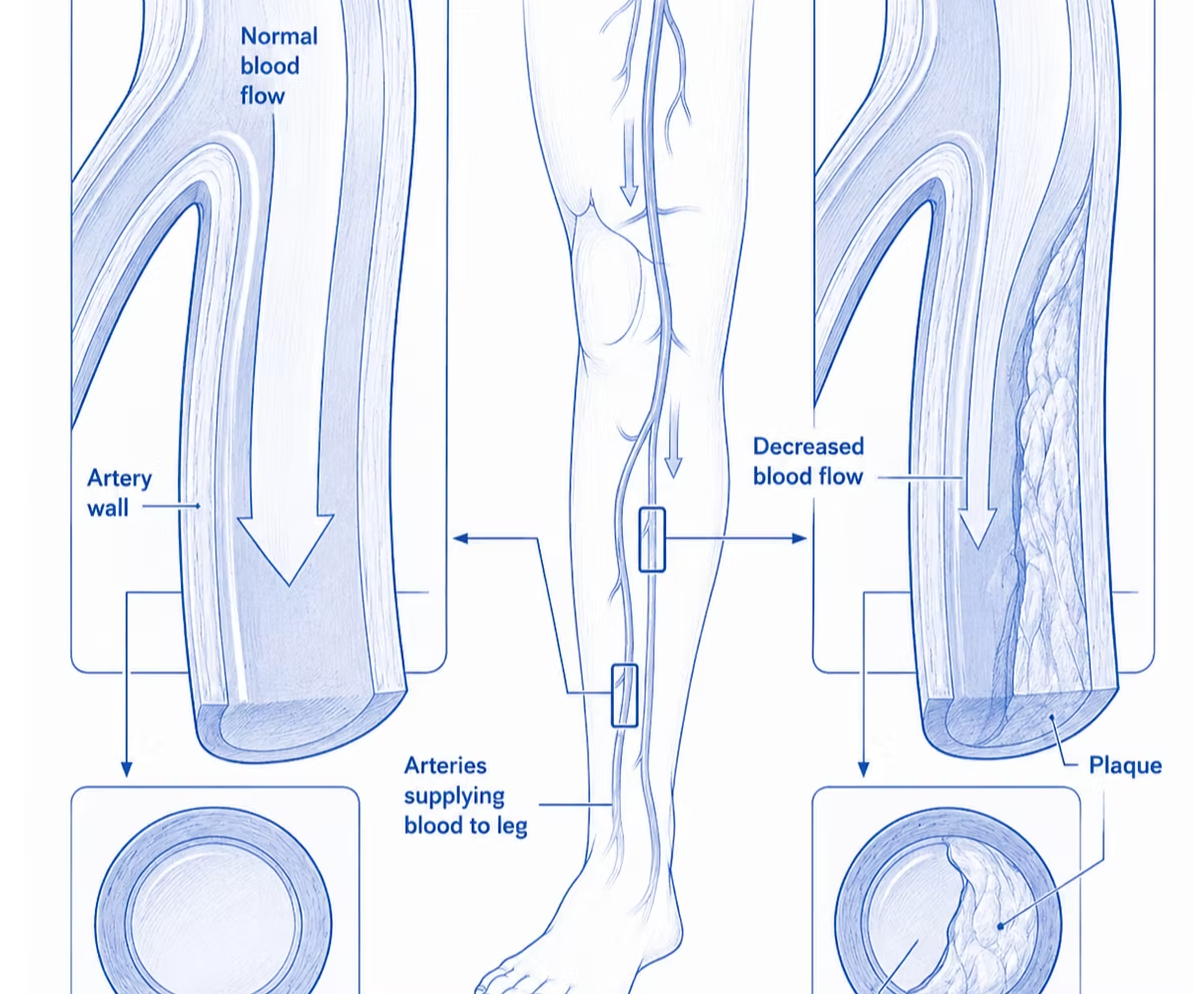
Arterial vascular disease occurs when arteries become narrowed or blocked, reducing blood flow to the affected area. This commonly affects the legs and feet and may cause pain when walking, cold feet, poor wound healing, ulcers, colour changes, or gangrene.

Investigations are performed to assess blood flow, identify the level of narrowing or blockage, and plan further treatment if required.

What to expect

Before Your Surgery

  • Investigation and diagnosis will be performed but surgical referral will be made to a vascular surgeon for any interventions or surgery needed

Day of Surgery

You will be admitted to the radiology unit, vascular laboratory, day ward, or hospital depending on the test required.

For ultrasound or ankle-brachial index testing, no anaesthetic is usually required. For angiography, local anaesthetic is used at the puncture site, usually in the groin or arm, and contrast dye is injected to show the arteries.

Procedure

Investigation may include clinical examination, pulse assessment, blood pressure comparison between the arms and legs, and wound or foot assessment.

Special tests may include:

  • Doppler ultrasound to assess blood flow
  • Ankle-brachial index to compare blood pressure in the arm and ankle
  • CT angiogram to show the blood vessels in detail
  • MR angiogram in selected cases
  • Catheter angiography, where dye is injected into the blood vessels to identify narrowing or blockage

Some investigations are non-invasive, while angiography may be performed as a procedure in hospital.

Procedure Length

The duration depends on the investigation performed. Doppler or ankle-brachial index testing usually takes 30–60 minutes. CT angiogram or angiography may take 1–2 hours.

Possible Complications

  • Possible complications include bruising, bleeding, infection at the puncture site, contrast reaction, kidney strain from contrast dye, blood vessel injury, blood clots, and unintended damage to surrounding structures.

Duration of Hospital Stay

  • Most non-invasive investigations are performed as outpatient tests.
  • CT angiogram is usually a day-case investigation. Catheter angiography may require observation for a few hours or an overnight stay depending on the findings and treatment performed.

Discharge Instructions

  • Drink fluids after contrast investigations unless otherwise advised. Keep the puncture site clean and dry if angiography was performed.
  • Avoid strenuous activity or heavy lifting for 24–48 hours after angiography. Continue medication as instructed.
  • Please contact the rooms if you develop bleeding, swelling, worsening pain, cold or pale foot, fever, rash, shortness of breath, or reduced urine output.

Return to Activities

  • Normal activity can usually be resumed after ultrasound, ankle-brachial index testing, or CT angiogram.
  • After catheter angiography, avoid heavy lifting, strenuous exercise, and prolonged walking for 24–48 hours, or as advised.

Back to Work Estimation

  • Most patients can return to work the same day or the next day after non-invasive tests.
  • After catheter angiography, desk work may resume after 1–2 days, while physically demanding work may require 3–5 days depending on recovery.

Follow-Up and Results Discussion

A follow-up appointment will be arranged to discuss the investigation results and decide whether further treatment is required.

If angiography was performed, the puncture site will be reviewed if needed. Histology is not usually applicable unless tissue was removed during a separate procedure.