
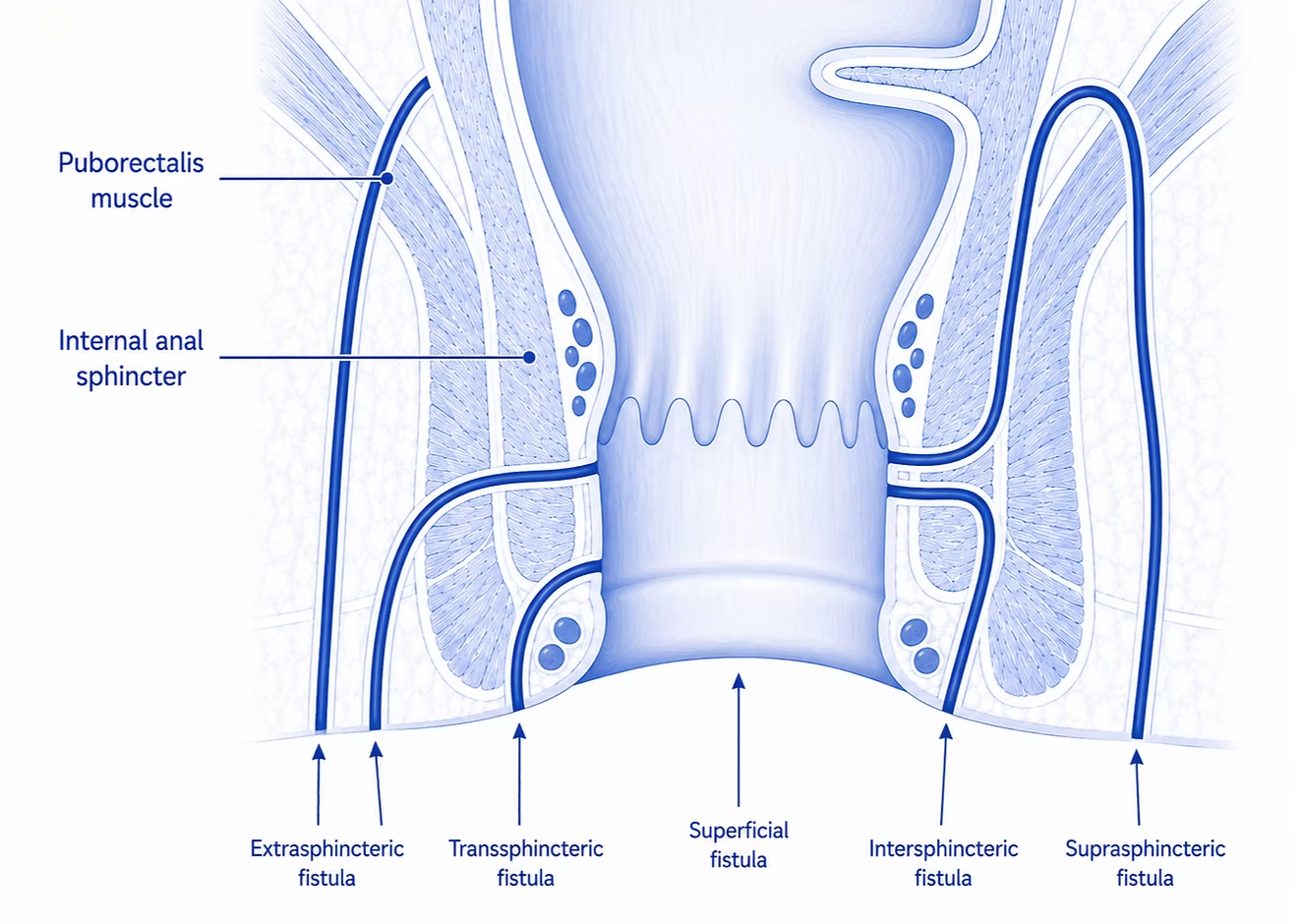
Fistula-in-ano

A fistula in ano is an abnormal tunnel that forms between the anal canal or rectum and the skin around the anus. It often develops after a previous perianal abscess or infection.

Symptoms may include recurrent pain, swelling, discharge of pus or blood, irritation of the surrounding skin, and repeated abscess formation.

What to expect

Before Your Surgery

  • Authorization should be obtained prior to surgery and will be done by the hospital or the rooms staff depending on whether you are an in- or outpatient.
  • Make sure that you have been fasting for solid foods for at least 6 hours prior to your surgery and for clear liquids or water for at least 2 hours prior to your surgery. Discuss your chronic medications with your doctor or hospital staff prior to your surgery as you usually are allowed to take chronic medications the day of surgery, barring diabetic medication the day of the procedure. If you are taking any blood thinning medication please discuss these in detail with your doctor as special arrangements need to be made for these.

Day of Surgery

You will be admitted to hospital or day theatre. The procedure is usually performed under general or spinal anaesthesia. After surgery, you will be monitored in recovery before discharge or transfer to the ward.

Procedure

Surgery is usually required, as fistulas rarely heal with medication alone. The type of procedure depends on the position and complexity of the fistula.

Treatment may include:

  • Fistulotomy, where the tract is opened and allowed to heal from the inside out
  • Seton placement, where a surgical thread is placed through the tract to allow drainage
  • Fistulectomy, where the tract is removed
  • More complex repair procedures if the fistula involves important sphincter muscles

The aim is to treat the fistula while preserving bowel control.

Procedure Length

The procedure usually takes 30–60 minutes, depending on the complexity of the fistula.

Possible Complications

  • Possible complications include bleeding, infection, pain, delayed wound healing, recurrence of the fistula, abscess formation, temporary or permanent difficulty controlling gas or stool, and unintended damage to surrounding structures.

Duration of Hospital Stay

Most patients are discharged on the same day, although an overnight stay may be required for complex fistulas, pain control, or wound care.

Discharge Instructions

  • Take prescribed pain medication, antibiotics, and stool softeners as directed. Keep the area clean and dry.
  • Warm sitz baths may help with pain and hygiene. Some discharge from the wound is expected while healing. Use dressings or pads as advised. Avoid constipation and straining by drinking enough water and maintaining a high-fibre diet.

Return to Activities

  • Light walking is encouraged. Avoid heavy lifting, cycling, prolonged sitting, and strenuous activity for 1–2 weeks or until comfortable.

Back to Work Estimation

  • Desk work: approximately 3–5 days.
    Physically demanding work: approximately 1–2 weeks, depending on pain, wound healing, and the type of procedure performed.

Follow-Up and Results Discussion

A follow-up appointment may be arranged 5–7 days after surgery for wound review and seton assessment if applicable.

A further follow-up is usually arranged 10–14 days after surgery for wound assessment, review of healing, histology discussion if tissue was removed, and planning of further management if required.