Diabetic foot & toe infection

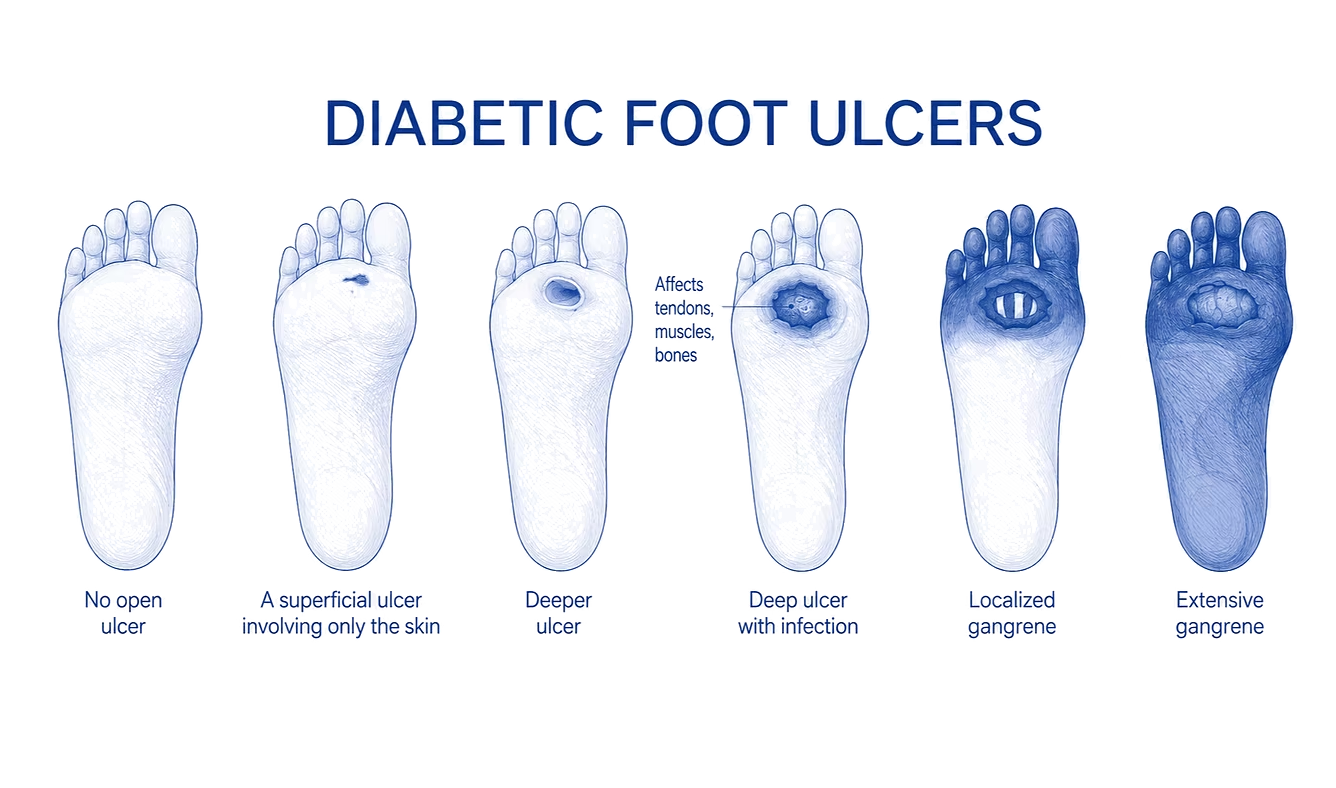
A diabetic foot or toe infection occurs when a wound, ulcer, blister, cut, or pressure area on the foot becomes infected in a patient with diabetes.

Diabetes may cause poor circulation, reduced sensation, delayed wound healing, and a higher risk of infection. Because pain may be reduced due to nerve damage, infections can become severe before they are noticed.

Symptoms may include redness, swelling, warmth, discharge, foul smell, skin colour changes, fever, worsening wound size, black tissue, or exposed bone.

What to expect

Before Your Surgery

  • Authorization should be obtained prior to surgery and will be done by the hospital or the rooms staff depending on whether you are an in- or outpatient.
  • Make sure that you have been fasting for solid foods for at least 6 hours prior to your surgery and for clear liquids or water for at least 2 hours prior to your surgery. Discuss your chronic medications with your doctor or hospital staff prior to your surgery as you usually are allowed to take chronic medications the day of surgery, barring diabetic medication the day of the procedure. If you are taking any blood thinning medication please discuss these in detail with your doctor as special arrangements need to be made for these.
  • Blood tests, wound swabs, X-rays, vascular assessment, and diabetic control assessment may be required before surgery.

Day of Surgery

You will be admitted to hospital and taken to theatre. The infected area will be cleaned, drained, debrided, or amputated if necessary. Tissue or pus may be sent for culture or histology.

After surgery, the wound will be dressed and you may require intravenous antibiotics, diabetic control, and wound care.

Procedure

Treatment depends on the severity of the infection.

Mild infections may be treated with wound care, offloading pressure from the foot, antibiotics, and close follow-up.

Surgical treatment may be required if there is an abscess, dead tissue, gangrene, deep infection, or bone infection. Surgery may include drainage of pus, debridement of infected or dead tissue, removal of infected bone, or partial toe or foot amputation if the tissue cannot be saved.

The wound may be left open to heal with dressings, negative pressure wound therapy, or delayed closure depending on the infection.

Procedure Length

The procedure usually takes 30–90 minutes, depending on the extent of infection and the surgery required.

Possible Complications

  • Possible complications include bleeding, infection, delayed wound healing, recurrence or spread of infection, poor circulation, need for further debridement, need for further amputation, chronic pain, wound breakdown, loss of limb, and unintended damage to surrounding structures.

Duration of Hospital Stay

Hospital stay may range from 1–7 days or longer, depending on the severity of infection, diabetic control, circulation, wound healing, and whether further surgery is needed.

Discharge Instructions

  • Keep the wound clean and dry. Take all antibiotics, pain medication, and diabetic medication as prescribed.
  • Do not walk barefoot. Avoid pressure on the affected foot and use crutches, special footwear, or offloading devices if advised.
  • Attend all dressing changes and wound care appointments. Check both feet daily for new wounds, blisters, redness, swelling, or skin colour changes.
  • Please contact the rooms urgently if you develop fever, worsening pain, increasing redness, swelling, foul-smelling discharge, black tissue, or new wounds.

Return to Activities

  • Limit weight-bearing as advised. Keep the foot elevated when resting. Avoid strenuous activity until the wound has healed.
  • Do not return to normal walking or closed shoes until cleared by your doctor or wound care team.

Back to Work Estimation

  • Desk work: approximately 1–3 weeks, depending on wound healing and mobility.
    Physically demanding work: approximately 4–8 weeks or longer, depending on the severity of infection and need for ongoing wound care.

Follow-Up and Results Discussion

A follow-up appointment may be arranged 5–7 days after surgery for wound review and dressing assessment.

A further follow-up is usually arranged 10–14 days after surgery for wound assessment, suture removal if applicable, culture or histology discussion, diabetic control review, and planning of further wound care if required.