Colon Cancer

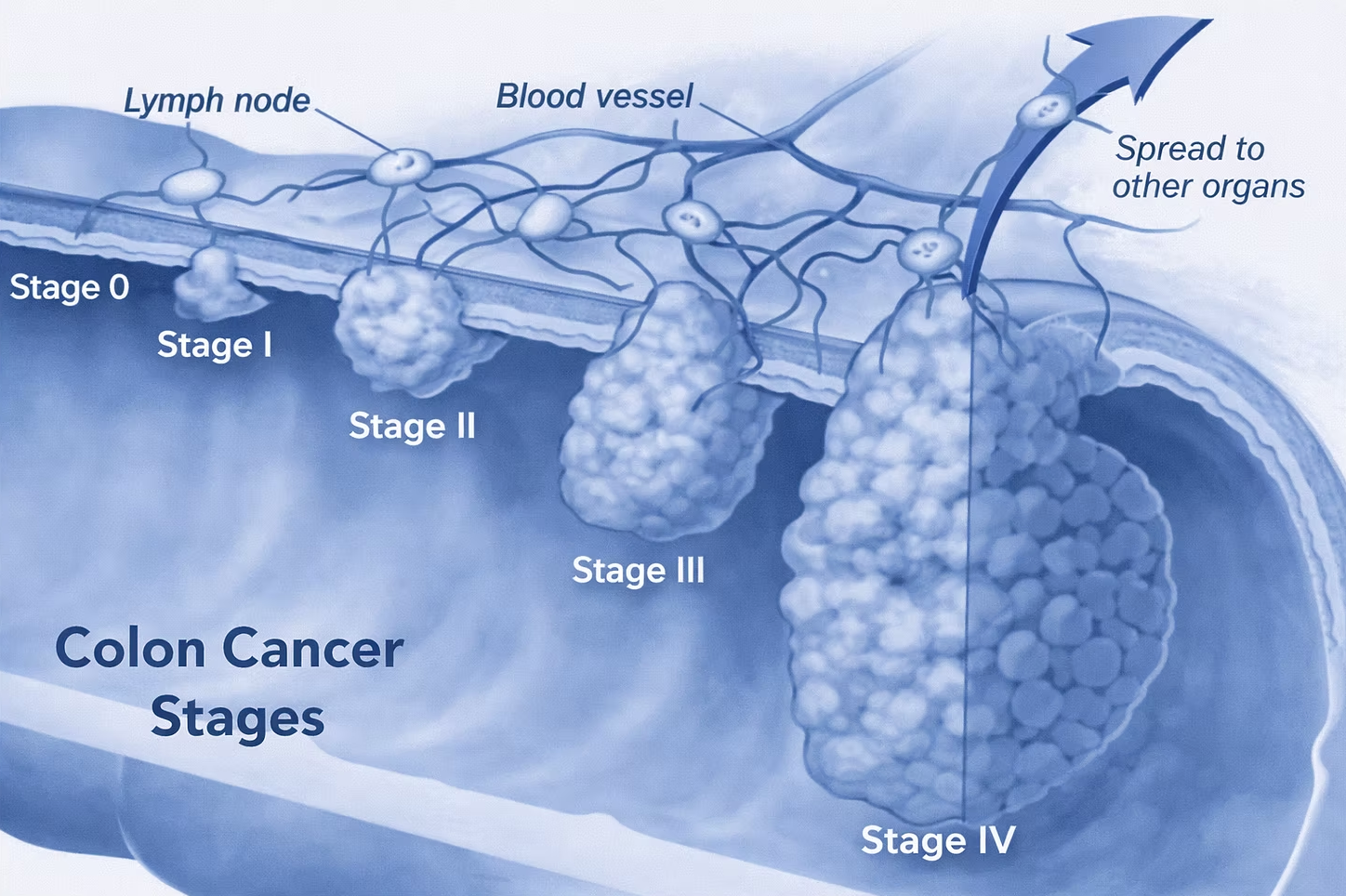
Colon cancer (also called colorectal cancer when it includes the rectum) is a malignant condition in which abnormal cells grow in the lining of the large bowel. It often develops slowly from pre-cancerous polyps, which is why screening colonoscopy and polyp removal can prevent cancer.

Symptoms may include a change in bowel habits, rectal bleeding, unexplained weight loss, abdominal pain, iron-deficiency anaemia, fatigue, or bowel obstruction. Some people have no symptoms and are diagnosed during screening.

Assessment aims to confirm the diagnosis, determine the stage, and plan treatment.

Clinical assessment and examination

Blood tests (including anaemia and liver function)

Colonoscopy with biopsy to confirm the diagnosis

Imaging for staging:

CT scan of chest/abdomen/pelvis

MRI (particularly for rectal cancers)

Additional scans if required

In selected cases, tumour markers may be used to assist with monitoring

Treatment is planned within a multidisciplinary team.

What to expect

Before Your Surgery

  • Authorization will be arranged by the rooms or hospital staff.
  • Pre-operative work-up may include blood tests, ECG, imaging, and anaesthetic assessment.
  • Bowel preparation may be required depending on the planned surgery.
  • Fasting:
  • No solid food for 6 hours before surgery
  • No clear liquids for 2 hours before surgery
  • Inform your doctor if you are taking blood-thinning medication.
  • Diabetic medication instructions will be discussed in advance.

Day of Surgery

Colon cancer surgery is performed under general anaesthesia. You may have:

  • IV lines for fluids and medication
  • A urinary catheter
  • Sometimes drains, depending on the operation
  • Pain control via tablets, injection, or epidural/nerve blocks in selected cases

Early mobilisation and breathing exercises are encouraged after surgery.

Procedure

Management depends on the tumour location, stage, and overall health.

  • Surgery is the main treatment for most colon cancers:

    • Removal of the affected bowel segment with lymph nodes (colectomy)

    • Reconnection of the bowel (anastomosis) when safe
    • In some cases, a stoma may be required (temporary or permanent)
  • Surgery may be performed laparoscopically (keyhole) or as an open operation
  • Chemotherapy may be recommended before or after surgery depending on stage and pathology
  • Endoscopic stenting may be used in selected cases of obstruction (as a bridge to surgery or palliation)

All removed tissue is sent for histological analysis.

Procedure Length

Surgery typically takes 2–4 hours, depending on the site and complexity.

Possible Complications

  • Bleeding
  • Infection
  • Anastomotic leak (leak from the bowel join)
  • Bowel obstruction or ileus after surgery
  • Injury to nearby organs (bowel, bladder, ureter, blood vessels)
  • Unintended damage to surrounding structures
  • Need for stoma formation
  • Blood clots (DVT/PE) or chest infection
  • Need for further procedures or surgery
  • Seek urgent medical attention if you develop severe abdominal pain, fever, persistent vomiting, increasing abdominal swelling, or heavy bleeding.

Duration of Hospital Stay

  • Most patients stay in hospital for 5–10 days, depending on recovery, return of bowel function, and whether a stoma is present.

Discharge Instructions

  • Take prescribed pain medication and other treatment as directed.
  • Keep wounds clean and dry and follow dressing instructions.
  • Walk daily and gradually increase activity.
  • Follow dietary advice and stay hydrated.
  • Monitor for fever, increasing pain, vomiting, wound redness/discharge, or problems with bowel function.
  • If you have a stoma, you will receive dedicated stoma care education.

Return to Activities

  • Gentle activity and walking are encouraged soon after discharge.
  • Avoid heavy lifting and strenuous activity for 4–6 weeks.
  • Driving is usually safe once you are comfortable, can react quickly, and are not taking strong pain medication (often 2–3 weeks).

Back to Work Estimation

  • Return to work depends on the operation, recovery, and job type:
  • Desk-based work: 3–6 weeks
  • Physical work: 6–12 weeks, depending on recovery and stoma status
  • If chemotherapy is required, timelines may be longer and individualised

Follow-Up and Results Discussion

A follow-up appointment is usually scheduled 1–2 weeks after discharge to:

  • Review wounds and recovery
  • Discuss histology results and cancer staging
  • Plan further treatment (e.g., chemotherapy) if needed
  • Arrange ongoing surveillance (repeat colonoscopy and imaging where appropriate)

If no follow-up appointment has been scheduled, please contact the rooms.